
12 Expert Tips On How To Run A Business Like The Pros | GetSling
Ask 10 people how to run a business and you’re likely to get 10 different answ...

A no call, no show absence is a serious offense. When an employee fails to show up for work and doesn’t let anyone know, it can seriously affect the other employees and the business as a whole.
If employees are left scrambling to cover the no call, no show employee, that can affect the performance of the entire shift and lead to a poor customer experience.
So how do you deal with a no call, no show employee (especially one who does it again and again)? We’re here to help you answer that question.
We’ll show you how you can set up a process to deal with the offender and how you can make it simpler to find a substitute for the no call, no show employee.

Handling no call, no show employees begins with a clear company attendance policy. This establishes your business rules so everyone knows what is expected of them in regards to arriving to and departing from work.
While a small team may only need a few simple guidelines, as more employees join your team, your business will need a more detailed attendance policy to prevent problems and keep everything running smoothly.
Every attendance policy is different, but common topics include tracking work hours, early clock-outs, late clock-ins, excused absences, unexcused absences, overtime, and job abandonment.
Be sure to explain each “problem” and outline what happens after multiple occurrences. Put these guidelines in your employee handbook so you always have a firm foundation for making fair decisions when a no call, no show absence occurs.
When it comes to no call, no show absences, it’s important to address the topic specifically and directly in your company attendance policy.
Define exactly what counts as a no call, no show incident and outline simple steps for handling real emergencies, time-off requests, and last-minute schedule changes. When employees know the right steps to take, they can act responsibly whenever a sudden personal issue arises.
Once your rules are written down, consult a local employment lawyer. Having a professional review your guidelines ensures your business stays fully compliant with local labor laws if you ever need to withhold pay or terminate an employee.

After you’ve established your no call, no show policy, make sure everyone (current employees and new hires alike) understands what’s required of them and has signed a document that confirms their agreement. This is an important step in dealing with no call, no show problems and should not be overlooked.
It’s not enough to simply write the policy in your employee handbook or send out an email. You need to have your employees confirm that they’ve read the rules and don’t have any questions.
Skipping this step can come back to haunt you if you ever have to deal with a problem employee. Without having a written record that the employee accepts your policy and fully understands what’s expected, they can always come back and say something like, “I didn’t realize that’s what you meant…”
You can avoid these misunderstandings by highlighting your policy during onboarding. Be sure to ask trainees if they have questions and then address any issues that may come up. Finally, have them sign a document stating that they were allowed to ask questions and that they fully understand this specific policy.
If you’re instituting this policy after operating without it, be sure to have a meeting for your existing employees. Give them the opportunity to ask questions and then require that they sign off on the policy.

After setting up your no call, no show policies, make sure you apply them fairly to every single team member. Whether you use progressive discipline or a strict zero-tolerance approach, treat everyone the same. Even your top workers.
Since true emergencies can happen to anyone, starting with a written warning or a short suspension is often better than immediate termination.
Regardless of the penalty, make it a point to sit down with the employee after their first offense. Talk through how missing a shift impacts team morale, customer service, and the daily operations of the company so they understand the bigger picture.
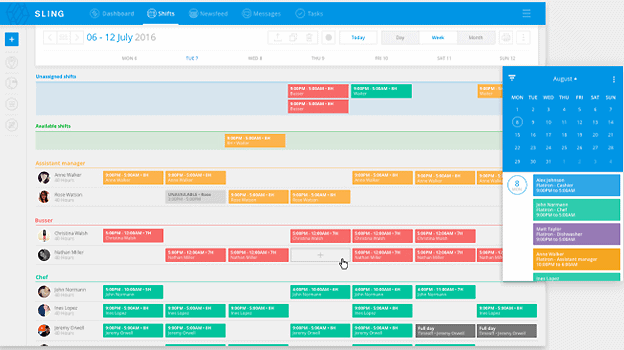
If you still have a problem after setting up your no call, no show policy, making sure everyone understands it, and enforcing the policy consistently, it’s time to improve your employee scheduling process.
Even if your business hasn’t encountered a no call, no show problem yet, you can prevent one from developing by examining the way you schedule employees.
Look closely at your scheduling process and ask yourself the following questions:
If the answer to any of these questions is no, your employees may see it as an unnecessary hassle and just decide that skipping work is easier.
Having a solid no call, no show policy is great, but what happens to your team and your business when someone doesn’t show up? Working shorthanded can stress out your team and ruin the customer experience.
Fortunately, avoiding this headache is easy. Instead of letting a missing worker derail your entire day, create a backup plan. Build an on-call list made up of reliable, full-time or part-time staff who are willing to cover last-minute shifts.
Many team members are eager for extra hours. However, if you struggle to find volunteers, try offering a small perk like a $0.25 per hour shift differential for emergency shifts.
This is often a small price to pay to have your shift fully covered and running smoothly when a no call, no show event sneaks up on you.

Getting to know your employees is a great way to prevent no call, no show incidents from happening. These types of absences are often the result of a build-up of factors both at home and at work.
Perhaps the employee is having problems with a family member and is feeling stressed. Perhaps the employee has a problem with a certain person at work and is feeling disengaged.
You won’t know unless you talk to your employees. Once you do know, though, you can take steps to help them and avoid no call, no show absences.
If they’re having problems at home, maybe the employee needs to go from full-time to part-time in order to take care of the issue. By giving the employee with the problem a chance to take care of things on his end, you avoid the possibility that the stress will build up and he just won’t show up one day.
If an employee is having problems at work, you need to know about it. Issues left to fester can pile up and make the employee feel unappreciated or even persecuted. That can lead them to feel that a no call, no show absence is justified to get your attention.
Head these issues off at the pass by getting to know your employees and reassuring them that they can come to you with any problems.
After all your hard work, you still may have to deal with a no call, no show absence from time to time. That’s just what being a manager is all about.
Resist the urge to get angry right away. Remember, your employee knows the rules, so there may be a legitimate reason that they couldn’t make it to work or call to let you know.
Don’t jump to conclusions and assume that they’re just doing it to be spiteful or that they’re a bad employee. That’s just a recipe for disaster.
Instead, stay calm, think positively, and focus on finding a substitute for the absent employee so that the shift is covered. Once you’ve done that, you can move on to find out why the employee didn’t call and didn’t show up for work.
After a set amount of time (that you enumerate in your no call, no show policy), call the employee to make sure they’re ok. They may be dealing with an emergency (or in an emergency themselves) and forgot to call.
When you do call, approach it as if you were calling the employee to find out if they need help. This will allow you to keep your anger in check. If the employee has no legitimate excuse, you can be angry (up to a point). But for now, you simply want to establish that the employee isn’t hurt or in trouble in some way.
Even if your call goes to voicemail, leave a simple message asking the employee to call you back. Here’s a sample message you can leave. Tailor it to fit your needs.
“Hi <insert employee name>. You didn’t show up for your shift this afternoon. I’m just calling to make sure you’re ok. Please call me back a.s.a.p. and let me know.”
Not only does this show that you care about your employees, but it also helps to strengthen your employee/employer relationship.
In some cases, you may want to ask the employee to bring you a signed note showing that they were where they said they were when they weren’t on their shift. This is another requirement that should be included in your no call, no show policy.
Emergencies are understandable. Even no call, no show absences are permitted under certain circumstances. But lying about an emergency (i.e., not having a note proving where you were) is unacceptable. You should not tolerate this type of behavior from your employees.

Your business’ success is directly dependent on how you manage your employees. One bad apple can spoil the whole bunch. Don’t let a no call, no show employee affect the team or your business.
Put a policy in place that establishes rules for absences and then make plans to cover employees who don’t show up for work. That way, all your bases will be covered, and you won’t be left short-staffed during an extremely busy shift.
The easiest way to keep track of all this is to use the right tool for the job: the Sling app. Not only does Sling help you avoid the difficulties associated with scheduling multiple people (e.g., double-bookings and no call, no show absences), but it also helps you find substitutes when problems do arise.
With Sling’s powerful messaging system, you can broadcast any message (like an open shift) to all your employees with the touch of a button. That means you can spend more time running your business instead of trying to find a replacement for a truant employee.
To streamline your scheduling process and combat no call, no show absences, check out our free employee scheduling platform at GetSling.com right now.
This content is for informational purposes and is not intended as legal, tax, HR, or any other professional advice. Please contact an attorney or other professional for specific advice.
See Here For Last Updated Dates: Link
In most workplaces, missing three workdays in a row without calling a manager counts as job abandonment. Companies view this as a voluntary resignation, meaning the worker chose to quit without giving formal notice.
Treating the absence as a quit allows employers to remove the person from payroll faster. However, managers should still review state labor guidelines and check on the person before officially closing their employment file.
Yes, you must pay workers for every single hour they’ve already worked before missing their shift. Federal wage laws strictly protect earned pay, so your business can’t keep wages as a punishment for walking off the job, and you must issue the final paycheck within the exact deadline required by state law.
Intentionally withholding money earned before the employee was fired can lead to serious legal penalties and expensive fines for your business.
Yes, you’re allowed to contact a missing employee’s listed emergency contact. When a team member misses a shift without notice and ignores your attempts to contact them via phone call, text, and email, reaching out to the emergency contact number is essential.
Consider this step a wellness check to ensure the employee is not in immediate danger. However, only discuss health and safety concerns with the emergency contact rather than sharing private disciplinary actions or detailed personal business.
Gather all leftover personal items as soon as possible and store them safely in a locked office. Write down a detailed inventory list so every item is accounted for. Next, send a written letter to the person’s home address explaining where and when they can collect their things.
Never throw away, give away, or destroy a missing or fired employee’s personal property. Doing so can trigger lawsuits over stolen or damaged belongings.
Schedule faster, communicate better, get things done.