35 Creative Food Truck Ideas for Your Next Business Venture
Want to start a mobile eatery in your area? Discover some of the most creative ...
If your dream is to be an owner or manager of a food-service business, understanding the options available to you (the types of restaurants you can open) is an essential first step in your success.
The restaurant industry bases its classification system on several variables, including:
In this article, the restaurant-management experts at Sling introduce you to the most common types of restaurants so you can plan your business accordingly.
Before we dive into the different types of restaurants out there in the world, it’s a good idea to understand how they’re often categorized. Learning about these four kinds of criteria may make it easier for you to whittle down the choices for your new business.
Restaurants typically fall into three kinds of service:
What is the general vibe you’re going for? Do you want lively music and lots of activity, like pool and darts? Do you want dim lighting, candles, and a quiet, romantic feel? Are you going for casual or more elegant? Packed or sparse?
All of those details together create the atmosphere you want to achieve in your restaurant. In a nutshell, you want to make sure your concept and your brand align with the environment you are creating.
Finally, your customers need to be confident they understand the price point of your restaurant. Knowing the cost of their meal allows them to feel relaxed and able to enjoy the dining experience.
You want to be able to advertise clearly where your restaurant fits into the big picture: $ (inexpensive), $$ (moderately priced), $$$ (expensive), and $$$$ (most expensive).
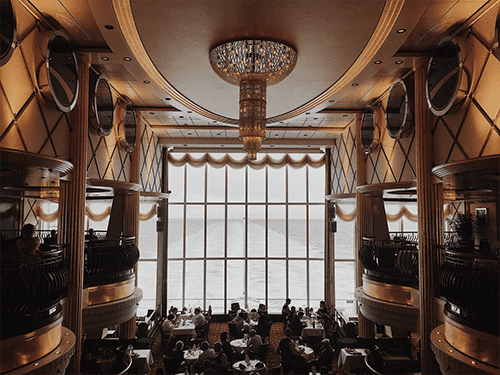
Fine dining restaurants offer diners an upscale meal experience often comprising several courses (e.g., salad, appetizer, entree, dessert).
These types of restaurants try to create a stylish atmosphere that speaks of elegance, exclusivity, and class.
Fine dining establishments can operate as a franchise for broader appeal or as a single location to increase their sophisticated image.
Casual dining types of restaurants usually share the following characteristics:
As a general rule, casual dining restaurants fall between fine dining and fast casual on the “fancy” spectrum.
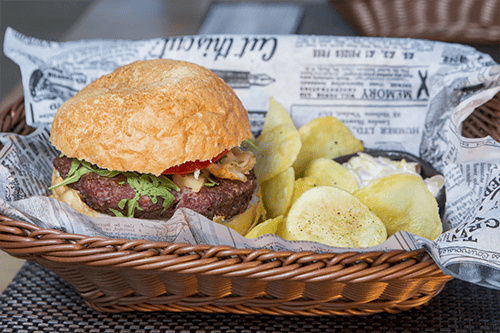
Fast casual restaurants cater to customers who are looking for fare that is relatively quick yet, at the same time, healthier than fast food and more affordable than a casual dining establishment.
As such, fast casual types of restaurants offer quality food, counter service (as opposed to table service), and a more casual, contemporary style and decor.
A ghost restaurant (a.k.a. virtual restaurant, delivery-only restaurant, online-only restaurant, or dark kitchen) is a food-service business that serves customers exclusively through phone orders, online orders, or both.
In a virtual restaurant, as the name rightly suggests, the majority (if not all) of the business is conducted via computer, tablet, or smartphone.
A ghost restaurant doesn’t have a traditional storefront with decor, signage, and a large dining room. Instead, this new business model only requires a kitchen and delivery drivers.
A family-style restaurant is similar to the casual dining model mentioned above with one significant difference: servers deliver the food in large dishes, and customers then serve themselves and pass it to other diners at the table.
These types of restaurants often have a more relaxed atmosphere than fine dining and casual dining models and cater to families with children or groups of friends.
Fast food is the most widely recognized type of restaurant thanks to franchise chains like Taco Bell, Burger King, and KFC.
Fast food restaurants attract diners because of their price, convenience, and speed. Because of this focus, ingredients in fast food restaurants are usually preheated or precooked (though not always).
Food is then delivered over the counter, or through a drive-thru window, and customers seat themselves.
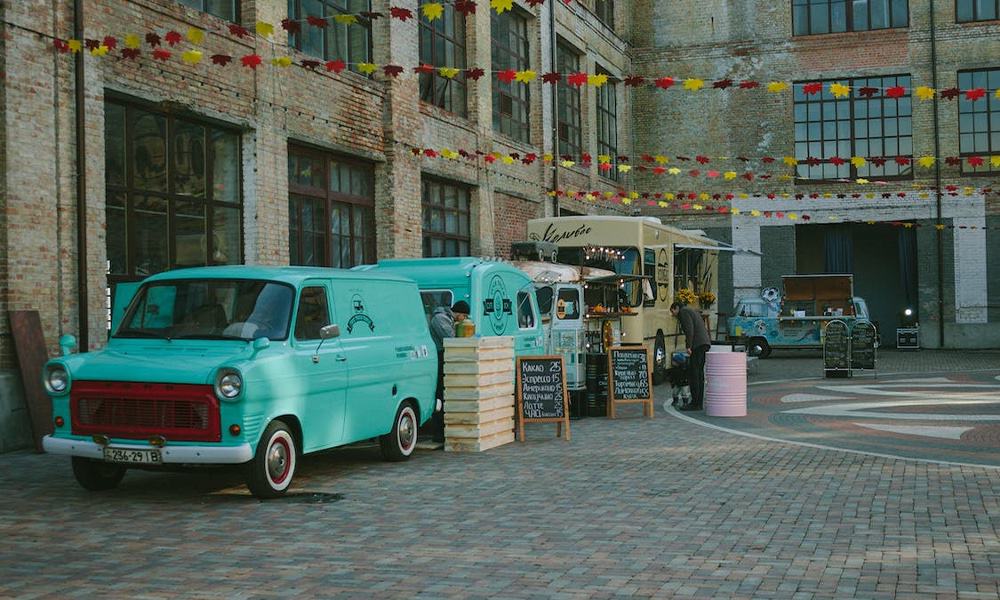
Food trucks, carts, or stands are unique modern businesses that normally specialize in a single type of food (e.g., tacos, sandwiches, hot dogs, ice cream, smoothies, etc.) and serve a limited menu that revolves around those items.
They are generally categorized as fast food restaurants because their focus is on speed. Additionally, seating options may be sparse or even non-existent.
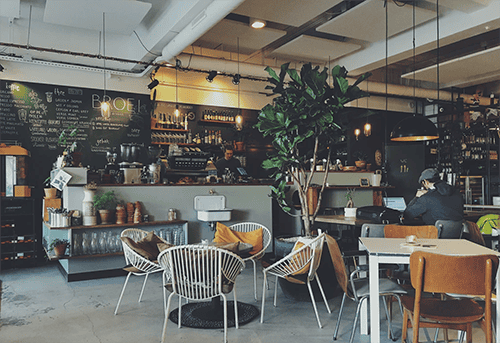
Cafes are characterized by outdoor seating, an unhurried atmosphere, and the loyalty of their repeat customers. Offerings include coffee, tea, pastries, small items for breakfast or lunch, and a small sampling of desserts.
Diners order food at the counter, pay on the spot, and serve themselves, so the cafe model does not require a large staff.
Turnover in cafes is usually low, and customers may work or socialize for long periods of time.
Buffets are an extension of the family-style restaurant where customers are provided a selection of food at a fixed price. Guests serve themselves and can return to the buffet as many times as they want.
The buffet concept lends itself well to specialty cuisine, including pizza, Indian, Chinese, “home cooking,” and breakfast foods, although this is not a prerequisite.
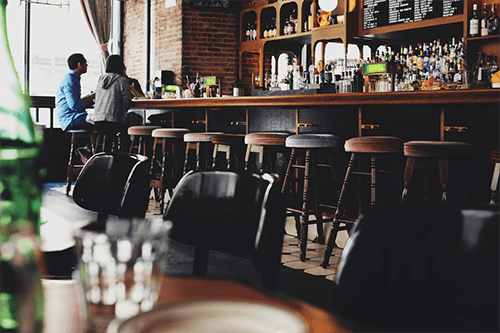
Pubs have a long tradition of being the place to go when you need to unwind and enjoy a beer or other alcoholic beverage at the end of a long day.
At first, they were little more than bars. But in modern times, pubs have expanded their menus to offer food items and full meals as well as beer, liquor, and non-alcoholic beverages.
Because of the wide range of fare and the festive atmosphere, pubs typically provide full table- and bar-service as well as casual decor, games (e.g., darts, pool, etc.), televisions for sports, and possibly even a dance floor.
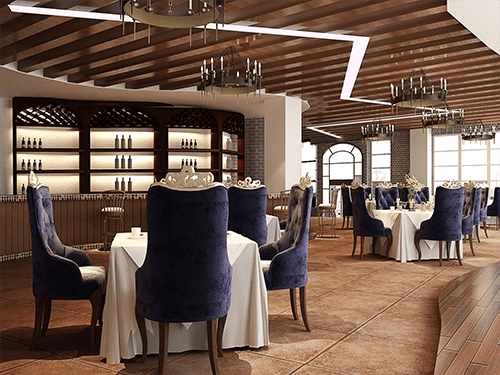
If you attended grade school or high school in the United States, you’re probably familiar with cafeteria-style dining.
By definition, a cafeteria serves ready-cooked food items arranged behind a long counter. Patrons line up, take a tray, and file in front of the various food choices, picking out what they would like to eat along the way.
Some cafeterias offer:
Cafeterias are similar to buffets, but cafeterias typically have servers behind the counter ready to dish out the food you choose.
Some large corporations, factories, and hospitals have in-house cafeterias to feed employees and patrons alike.
That concept, though, extends to stand-alone restaurants all across the country. In fact, in the mid-20th century (the 1940s, 50s, and 60s), cafeteria-style automats were a very successful type of restaurant in large cities like New York.
Automat cafeterias featured banks of vending units, not the automated kind of vending machines you’re used to in the 21st century, that displayed fresh food for sale.
Patrons would take a tray, deposit coins in the machine that offered their choice, lift a small window, and remove the food item therein. Attendants and cooks in the kitchen behind the vending machines would then replenish the food item for the next patron.ts and cooks in the kitchen behind the vending machines would then replenish the food item for the next patron.
With the spread of Starbucks around the world, most people are familiar with the concept of the coffeehouse.
As a type of restaurant, the coffeehouse offers some unique features that you won’t find anywhere else, including:
Coffee shops are similar to cafes, but the focus at the coffee house, and the item that most people show up for, is the hot beverage.
Coffeehouses offer a wide variety of coffee drinks as well as hot tea and other drinks. The food in a coffeehouse often takes second place as a draw for customers.
For more information on this type of restaurant, take a moment to read our article, How To Start A Coffee Shop | A Detailed Guide.
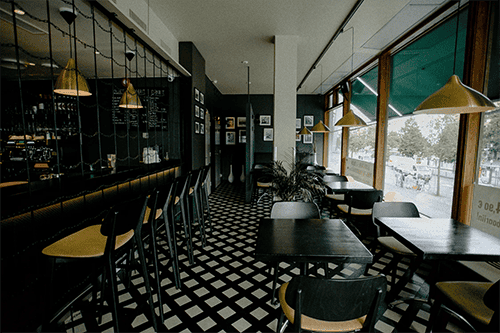
At one time, you could find a diner (a.k.a. a greasy spoon) in every town in America. This type of restaurant is characterized by low-cost fried foods (e.g., chicken and fish), burgers, and breakfast items.
Many diners were open 24 hours and featured booths and table service as well as a long bar with stools where patrons could sit and receive their food straight from the kitchen.
Diners with a nostalgic theme, and even high-quality and high-priced fare, are becoming more common in downtown areas as employees at nearby businesses discover the benefits and convenience of leaving the office for lunch and an occasional break.
The pop-up eatery is a novel type of restaurant that allows owners and chefs to experiment with different ideas and different styles of food without changing their established location.
The pop-up restaurant is also a fun and unique way to “test the waters” to see if a specific concept or cuisine would be successful in a certain area.
Pop-up restaurants range in format from a beer garden that is only open from May through August, to a fine dining restaurant in a unique location (e.g., a warehouse, rooftop, or other old building), to a contemporary casual restaurant that moves from location to location every few nights.
The attraction of these restaurants often lies in their novelty, but the food and drink will keep customers talking for long after the pop-up disappears.
Contemporary casual restaurants, a recent offshoot of the fine dining concept, cater mostly to young professionals in urban and metropolitan areas.
As a concept, these eateries are modern and trendy and often offer a distinct brand that diners find appealing.
Such concepts include, but are not limited to:
The food, and often the restaurant itself, relies heavily on visual appeal (though taste is also important) and caters mostly to the Instagram generation.
The bistro concept got its start in France as a place to serve hearty meals at a moderate price in a not-so-formal setting.
When restaurateurs began opening bistros in the United States, the format evolved to include more refined decor, fewer tables, finer foods, and higher prices.
Most bistro owners don’t consider their restaurant a fine dining establishment, per se (multiple courses in an opulent atmosphere), but rather as classy (and classic) fare in an upscale atmosphere.
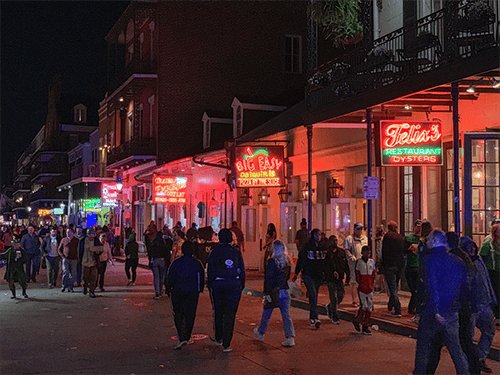
A destination restaurant draws patrons from beyond its immediate area or community.
The concept of the restaurant itself, the appeal of the food, the head chef, or the history of the establishment has to be strong enough (and famous enough) to motivate customers to make the trip from out of town.
Some franchises have become destinations in the past few years, but, by and large, very few restaurants achieve destination status unless they have been around for a long time.
Destination restaurants in the United States include:
The teppanyaki grill (a.k.a. hibachi) is a type of restaurant specializing in Japanese cuisine prepared with dramatic flair in front of patrons.
Multiple parties (of typically eight to 10) sit together and watch the chef prepare their order on a hot grill a foot or two away.
As the food is cooked, the chef entertains guests with various “tricks,” including building a volcano out of onion slices, catching a lemon on a fork behind their back, flipping small shrimp into a customer’s mouth, and tossing an egg into the air and cracking it on the edge of a spatula.
The Mongolian barbecue is a variation on the teppanyaki grill.
In this type of restaurant, diners assemble a bowl of raw ingredients from a buffet line, hand the bowl to the cook, and watch as they stir-fry the food on a large griddle.
The cook then plates the food and hands it to the diner, who returns to their seat to eat.
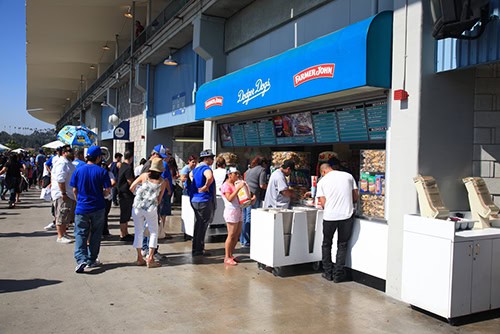
You’ll find concession stands inside many public places, including ballparks, theaters, amusement parks, and festivals.
Some concession stands only offer one or two items: think snow cones, popcorn, hot dogs. Because of that, they can be relatively inexpensive to start and can do brisk business if positioned in a busy location.
Regarding location, a concession stand typically occupies a relatively small space and has just enough room for a service counter, light equipment, and a small kitchen. In fact, some concession stands are little more than a kiosk that can be operated by one person.
A digital-only restaurant is one in which there are no seats or tables, only a small counter through which you distribute the food.
Orders are placed online, and payments are made through common money apps like Venmo, Apple Pay, PayPal, Google Pay, and Samsung Pay.
When the customer arrives, they simply walk up to the counter, give the employee their number (or type it into a kiosk), collect their food, and leave to eat it elsewhere.
Like most restaurants, the digital-only variety needs a good-sized kitchen. Unlike most restaurants, though, the digital-only variety doesn’t need an elaborate street presence or dining room (and all the expense that goes with them).
Digital-only restaurants do rely heavily on technology to work, so if that’s not something you want to deal with, you may want to consider a different option.
Done well, a theme restaurant can be a popular destination for families and adult diners alike. Common themes include:
While the theme may affect what you choose to serve, the food can be similar to other types of restaurants, but come with unique names that correspond to the theme.
Traditional bakeries may be little more than a kitchen and a counter over which customers purchase the baked goods.
But modern bakeries have transformed into places where customers can linger, order a coffee or tea, and sample pastries, breads, and doughnuts as they come out of the oven.
In that way, a modern bakery may be more akin to a coffee house or cafe, but with the focus on quality baked goods made fresh every day.
The delivery-only restaurant takes the digital-only trend one step further and does away with public access altogether.
Diners place their orders online and then pay through apps like Venmo, Apple Pay, and PayPal. After that, the restaurant prepares the food and sends it out for delivery (through on-site employees or services like DoorDash, GrubHub, and Uber Eats).
The simplicity of this business design means owners and operators don’t have to spend money on the customer-facing side (other than advertising, of course) and can focus on making good food and delivering it to customers as quickly as possible.
Some restaurants specialize in a particular food, and as a result, the staff who work there need a depth of knowledge about it. For example, someone who works at a steakhouse needs to be able to talk about cuts, marbling, and tenderness.
Some typical food speciality shops include:
Many factors go into deciding what kind of restaurant you want to open, but if you want to start with the best chance for success, spend some time really thinking about what model aligns with your vision. A few vital questions to clarify alignment include:
If you’re looking for speed and cash flow, you may want to go with an efficient model, like a fast food joint or food truck, cart, or stand. If you’ve got experience and want to create a memorable atmosphere, casual or fine dining may be the way to go. And ghost kitchens minimize risk.
The bottom line? Make sure your reality matches your vision.
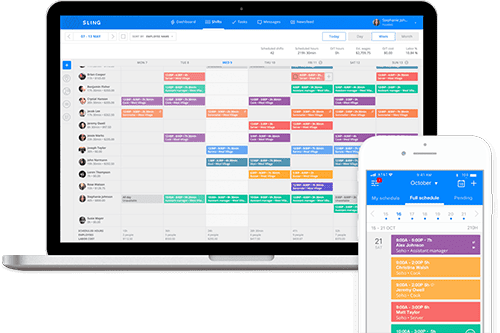
Regardless of the type of restaurant you choose, from traditional brick-and-mortar establishments to virtual restaurants and everything in between, organizing your team and keeping them on task is vital for the success of your business.
Effective scheduling is the key to that organization. And Sling offers it! With powerful and intuitive scheduling, as well as a whole host of tools to help you optimize the way your business runs, Sling brings simplicity and value of all-in-one workforce management software.
Try Sling for free and discover just how easy it is to streamline your operations and keep your business on the road to success.
This content is for informational purposes and is not intended as legal, tax, HR, or any other professional advice. Please contact an attorney or other professional for specific advice.
A soft opening is a small event, typically attended by invitation only, that gives a restaurant owner a chance to test a menu before it is fully launched. Feedback is usually welcome during a soft launch, so changes can be made if necessary.
Sometimes, a restaurant owner does a soft launch to get their staff familiar with the menu and dining flow, or they may do it to generate buzz and excitement about their restaurant before an official opening.
Making sure you have all of the right licenses and permits before you open your restaurant will save you money in fines and prevent delays. Requirements vary, depending on the kind of restaurant you’re opening and its location, but you typically need:
Different types of restaurants can be equally profitable. Whether your restaurant has high start-up costs or low, it can have a decent profit margin. That said, some of the most profitable types of businesses are bars, food trucks, diners, delivery, and pizzerias.
A restaurant business plan is often a long document, containing both goals and the ways to achieve them. A business model outlines what the business is all about, how it makes money, and how it can be profitable.

Schedule faster, communicate better, get things done.